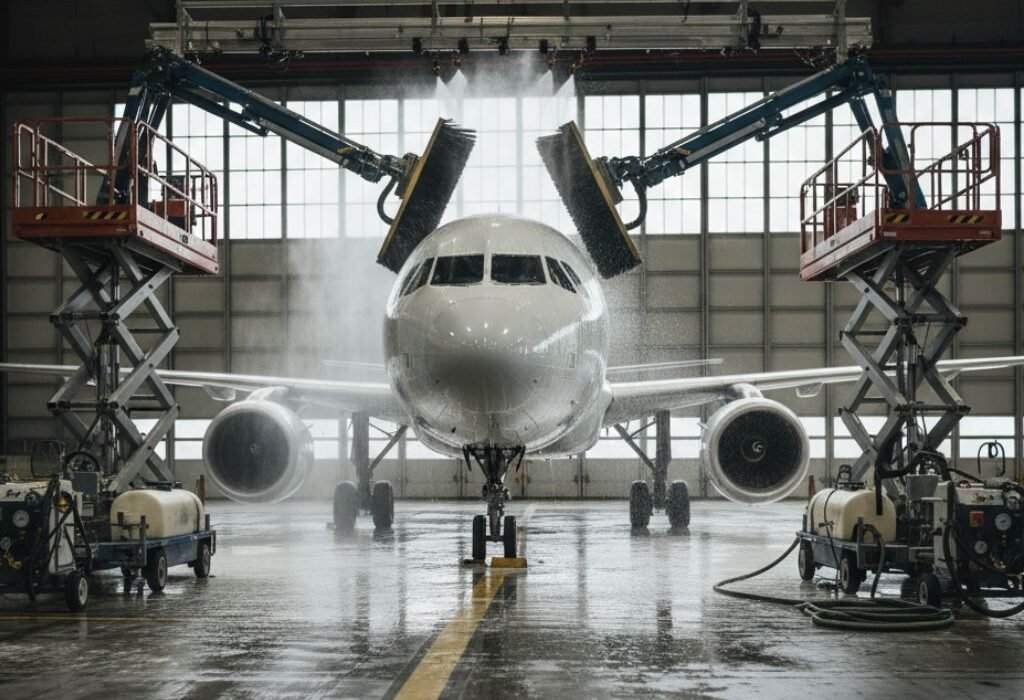
Aircraft Wet Wash

Untitled design (3)

Deep Clean. Maximum Shine. Total Protection.


Heavy contamination—soot, hydraulic fluid, salt spray, and runway grime—requires a full wet wash for the aircraft to regain its brilliance. Billionaire Jet’s Aircraft Wet Wash is a safe, comprehensive, water-based exterior cleaning service that systematically eliminates stubborn buildups all while protecting paint, composites, polished metals, and decals.

Our aviation-approved detergents, controlled low-pressure water systems, thick foam application, and extreme detail with microfiber hand washing offer a deep clean for not only the aesthetics of the aircraft but also the long-term health and maintenance of it. This service is best to restore the appearance of private jets, charter aircraft, turboprops, helicopters, and corporate aircraft fleets so that your jet is spotless, corrosion-free, and ready to fly at all times.


Note:- Many fbo don't allow washing with water due to airport regulations.

Why Choose Aircraft Wet Wash


  • Aviation-Safe Detergent Deep Cleaning

Detergents that are FAA-approved/aircraft-rated break down grease, hydraulic fluid, soot, and salt deposits while still being safe for modern paint and composite surfaces.

  • Low-Pressure Washing

Low-pressure washing is gentler; nothing protrudes into the pitot tubes, sensors, antennas, and avionics housing, so nothing can be dislocated.

  • Heavy Contaminant Removal

Heavy contaminants get removed, such as fuel stains, brake dust, de-icing residue, runway tar, and other corrosive pollutants that dry cleaning cannot remove.

  • Enhanced Surface Brightness and Luster

Foam application followed by microfiber hand wash, rinse, and spot-free rinse restores gloss, depth, and reflective clarity, which results in showroom quality.

  • VIP Service You Can Trust

Technicians trained in VIP/VVIP and corporate aviation service assure the highest level of discreet and professional service, trusted around the world.


 

What’s Included in Our Aircraft Wet Wash Service


  • Pre-Rinse & Contaminant Softening

A managed pre-rinse loosens hardened residues like dust, soot, and bugs. This step reduces friction and surface tension and prepares the aircraft for a deeper clean while protecting delicate paintwork and composite structures.

  • Foam Application

A thick foam that is approved for use in aviation is applied evenly over the exterior of the aircraft. This foam has high lubricity and penetrates the many contaminants, such as grease, hydraulic fluid, and runway grime, and will suspend the contaminants for safe removal, without injuring the paint, decals, or protective coatings.

  • Hand Microfiber Washing

The detailing specialists wash the surfaces of the aircraft by hand with microfiber mitts that are ultra-soft. This controlled process avoids adding micro-scratches and swirl marks while optimizing the coverage of the wings, fuselage, tail surfaces, and access panels.

  • Landing Gear & Undercarriage Cleaning

Using aviation-safe degreasers, special brushes are used to clean the landing gear assemblies, wheels, struts, and brake housings. This cleans the oil residue, brake dust, Skydrol, and runway tar to make the aircraft look good and safe to fly.

  • Low-Pressure Rinse

A controlled low-pressure rinse is used to rinse foam and contaminants while avoiding high pressure that may allow water intrusion into sensitive systems like pitot tubes, sensors, antennas, or avionics systems. These procedures emerge clean and functional and complete the cleaning process.

  • Streak-Free Drying

The aircraft is completely dried using high-absorbency microfiber towels and carefully controlled air blowers. This ensures there are no streaks, water spots, or mineral deposits left behind. The aircraft is left with a smooth, uniform, and polished finish, improving gloss, presentation, and pride of ownership.

  • Window & Windshield Detailing

Cockpit and cabin windows are cleaned with anti-static glass cleaners that are aviation approved. The glass cleaning process restores crystal clear visibility for the pilot and passengers while keeping the acrylic and polycarbonate surfaces free of hazing or scratches.  

  • Final 360° Inspection

A thorough walk-around inspection of the entire exterior of the aircraft is performed by our technicians—wings, fuselage, tail, gear assemblies, and windows. We verify every detail against our premium standards, ensuring your jet is returned contaminant-free, polished, and ready for flight.


Suitable For

How the Process Works


1. Request a Quote 

Share aircraft type, location, and preferred date.

2. Inspection & Scheduling

We assess contamination levels and schedule with minimal downtime.

3. Full Aircraft Wet Wash (On-Site Wash Bay / Hangar-Approved Area)

Performed on-site or in authorized wash bays using aviation protocols.

4. Final Check & handover

Aircraft returned spotless, polished, and flight-ready. 


Benefits of Aircraft Wet Wash


  • Prevention of Corrosion

Our wet wash service safely removes corrosive materials like salt residue, hydraulic fluid, de-icing chemicals, and industrial pollutants that can further facilitate oxidation processes. The removal of these substances protects the aircraft’s ability to maintain its structural integrity while also maintaining its exterior finish for years to come, saving you the cost of repairs. This preemptive protection will allow your jet aircraft to remain resilient to the elements while ensuring both safety and value.

  • Aerodynamic Efficiency

Cleaner surfaces yield better airflow. By maintaining a clean, soot-free exterior, as well as removing grime and runway contaminants, our wet wash minimizes drag and increases aerodynamic performance. This not only enhances fuel efficiency but also contributes to more efficient flight. A clean aircraft exterior is not just aesthetic; it’s also a fundamental contributor to performance maximization and operational excellence.

  • Extended Surface

Lifespan Paint, composites, polished metals, and protective coatings can all face premature degradation if contaminants are neglected. Our wet wash safeguards these surfaces by protecting the substrate and preventing microdamage. This promotes longer-lasting finishes, reduces maintenance, and ensures an aircraft exterior that is always sparkling clean and appears to have been meticulously treated.

  • Luxury Presentation

A newly cleaned aircraft is more than just a vehicle—it represents status. Our wet wash provides freshly cleaned, showroom-quality aesthetics that contribute to brand representation and enhance the passenger experience for clients. Whether welcoming high-end clientele, prepping for inspections, or showcasing during departure, a polished, pristine, and impeccable jet immediately offers sophistication, professionalism, and an overall luxurious experience.


Exterior Detailing Packages

Platinum

Signature jet shine for flawless first impressions.
Complete aircraft wash & dry
Surface wax protection
Bug & exhaust residue removal

Emerald

Restoration-level detailing for long-term brilliance.
Full exterior decontamination
High-gloss machine polish
Degreasing & bug removal
Hydrophobic surface sealant
Landing gear & Belly flap
Wheel cleaning

Diamond

The pinnacle of exterior care and protection.
Surface Mastery
Aircraft-grade ceramic coating
Wheel & coating
Exterior door seals
Window polish
Bug & exhaust residue removal
Hydrophobic surface sealent
Final gloss check
ChatGPT Image Nov 19 2025 01 49 08 PM
How frequently should an aircraft be washed?
For most private and charter aircraft, washing every 2-4 weeks is ideal. This depends on the aircraft's operational schedule, exposure to the environment, and aircraft storage conditions. Aircraft that operate in either coastal, industrial, or on dusty runways will most likely need to be washed more frequently to prevent corrosion and/or surface corrosion phenomena.
Is your washing process safe for aircraft paint and coatings?
Yes! We use aviation-approved, non-corrosive products in addition to using only soft-touch washing techniques developed for protecting aircraft paint, clear-coats, composites, and polished metals. Our washing process avoids micro-scratching/dulling, oxidation, and paint dulling.
Do you cover or protect sensitive areas while washing?
Absolutely! We mask and avoid all sensitive components including pitot tubes, static ports, sensors, antennas, openings to the avionics compartment, and cleaning of the windows of acrylic. Every wash follows a strict safety procedure to ensure full operational integrity.
Can I have my aircraft washed outside?
Yes, aircraft washing can be done on-site outside, as permitted by public airport or hangar regulations. However, a properly ventilated hangar environment will yield the best results for a spotless, streak-free appearance in hot, windy, or dusty conditions.
Do you provide mobile aircraft washing at private hangars?
Yes. Our fully equipped mobile detailing team can service your jet at your hangar, FBO or wash bay, subject to airport permissions and local regulations.
What type of aircraft do you service?
We wash many different types of aircraft including private jets, business jets, charter aircraft, turboprops, helicopters, regional fleet aircraft, and corporate aviation fleets.
Will washing help prevent corrosion?
Yes. Regular washes can be effective at removing salt, moisture, pollutants, hydraulic residue, and fuel stains, which contribute to corrosion. Regular cleaning is part of preserving the safety of the aircraft.
How long does the aircraft washing process take?
Depending on aircraft size and condition, the service typically takes 1.5 to 4 hours. Larger or heavily contaminated aircraft may require additional time for safe and thorough cleaning.
Do you use pressure washers on the aircraft?
We avoid high-pressure washing near sensitive areas. In most cases, we rely on low-pressure rinsing, foam application, and microfiber hand washing to ensure safe cleaning without risking damage to sensors, seals, or paintwork.
Can you remove tough stains like fuel residue, bugs, or exhaust marks?
Yes. We use aviation-safe degreasers and decontaminants to remove stubborn contaminants such as bug residue, exhaust soot, oil stains, and fuel streaks — all while protecting your aircraft’s finish.